
64 Schools, One Cyberattack: What Springfield Public Schools Teaches K-12 IT Leaders About Operational Resilience
Share this post
Author
In September 2026, a cyberattack didn’t steal a single dollar from Springfield Public Schools — and it still shut down the entire district for a week. Nurses couldn’t access medication and allergy information. Central office phones went silent. And nearly 30,000 students in Springfield, Massachusetts stayed home while the district worked through what officials classified as a district-wide Level 4 cyber incident.
The FBI and Massachusetts State Police assisted with the response as the district worked to contain the incident and restore access to critical systems. Weeks later, officials confirmed that data had in fact been exposed, with staff and student information reportedly involved. But the closures themselves happened before anyone knew whether a single record had been stolen — because the systems the district depended on simply stopped working.
That distinction matters for every school district watching this story unfold. Springfield isn’t a cautionary tale about data theft. It’s a case study in what happens when operational dependency meets a determined attacker.
The Cost Wasn’t the Data. It Was the Operations.
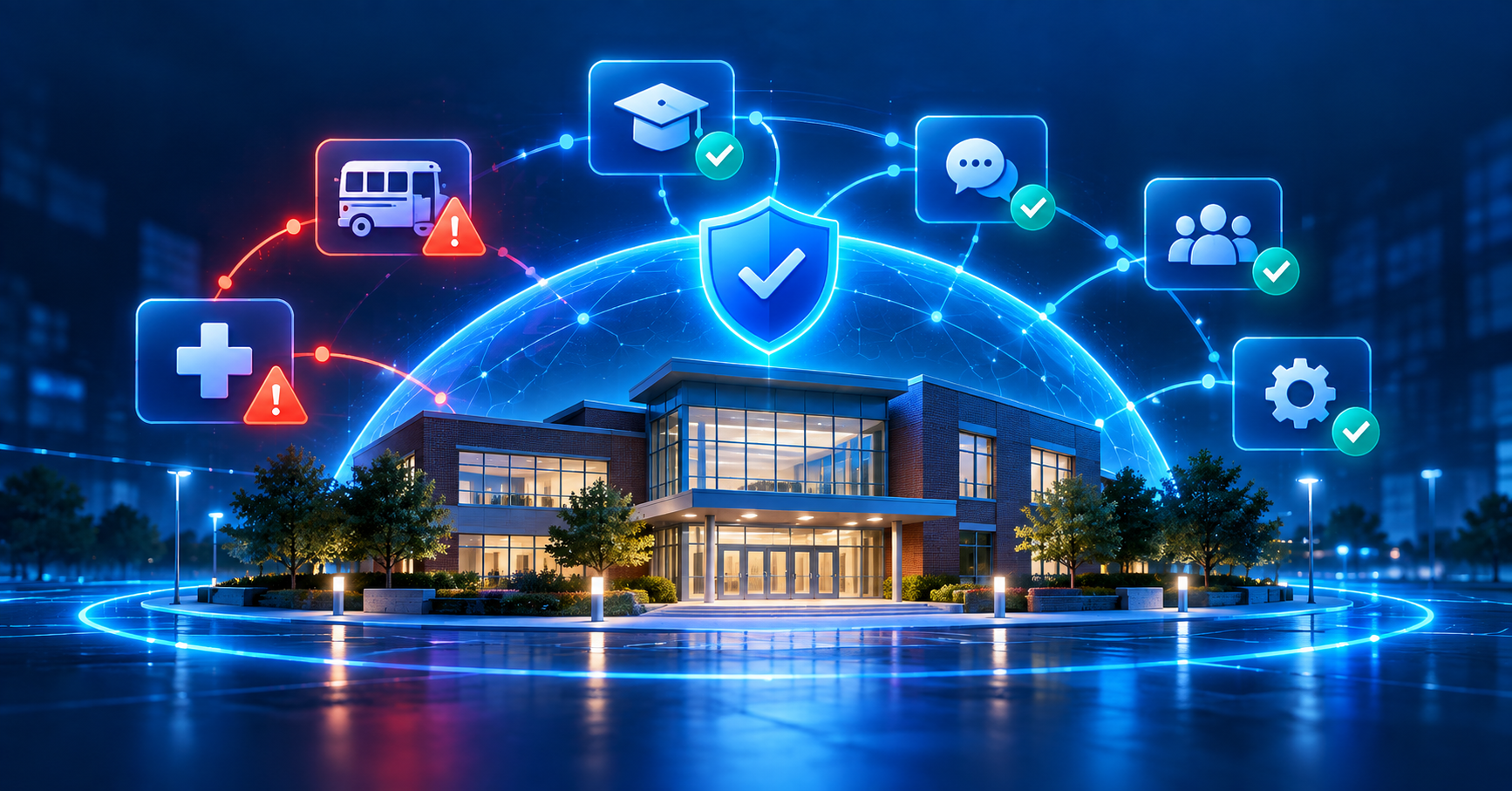
Modern school districts run on a web of interconnected systems: student information platforms, health record systems, transportation software, communication tools, and administrative applications that rarely get a second thought until they’re unavailable.
In Springfield’s case, the most consequential disruption involved the system nurses use to see student medication needs and allergy information. Without it, district leadership made the call that no amount of planning ever makes easy: close the schools, because the risk of operating without that information was too high.
That’s the real lesson. A ransomware note demanding payment is a crisis every IT leader has rehearsed for. A quieter loss of system availability, with no ransom demand and no immediate answers, is often the scenario nobody has a runbook for.
Why Every District Should Be Paying Attention
- Every district runs on the same dependencies. Health records, transportation, communication, and administrative systems are just as essential — and just as exposed — in any K-12 environment, not just large urban districts.
- The story can change weeks after the headlines fade. Springfield’s incident evolved from a systems-availability emergency into a confirmed data exposure involving staff and student information — a reminder that recovery doesn’t end when the doors reopen.
- Size doesn’t determine exposure. Springfield is one of the largest school systems in Massachusetts, but the systems that failed — student health records, communication platforms, network access — exist in districts of every size.
Building Operational Resilience Before the Next Incident
Prevention will always matter, but Springfield is a reminder that resilience planning matters just as much. The districts that recover fastest are the ones that already know the answers to a few uncomfortable questions — organized here across the four areas that mattered most in Springfield’s response.
Identity & Access
- Is multi-factor authentication enforced across staff, faculty, and administrative accounts?
- Are privileged and administrative accounts using phishing-resistant authentication?
- Is network access continuously monitored for early signs of unauthorized entry?
Business Continuity
- Can nurses, transportation staff, and administrators access critical information manually if primary systems go down?
- How quickly can essential systems actually be restored from tested backups?
- Has your district ever tested a full system outage scenario, not just a tabletop discussion?
Monitoring & Detection
- Who is watching your identity, endpoint, and network activity after hours and on weekends?
- How quickly would your team detect unauthorized access before it escalates district-wide?
- Is there a monitored process for investigating and containing suspicious activity around the clock?
Communication & Recovery
- Does district leadership have a communication plan that doesn’t depend on the systems that might be down?
- Are staff, families, and law enforcement partners part of a rehearsed notification process?
- Is there a clear decision-making framework for closures, delayed openings, and manual operations?
How Guardian 365 Helps
Guardian 365 gives education organizations 24x7x365 monitoring across identity, endpoint, email, and cloud-app activity, built around the Microsoft security ecosystem most districts already own. That means catching unauthorized network access early, before it escalates into a district-wide shutdown, and having a monitored, tested response plan in place before an incident happens, not during one.
Not yet enrolled in Guardian 365 threat monitoring? Reach out to your Customer Success Account Manager (CSAM) to review your district’s incident response readiness.
Ready Before the Next Incident, Not During It
You don’t have to wait for a district-wide closure to find out where your gaps are. A free Guardian 365 security assessment gives your district a clear picture of your Microsoft Entra ID, Microsoft Defender XDR, and Microsoft 365 posture — and a practical roadmap for closing the gaps before they become a school closure.
Email info@forsyteit.com to get started.
We Make Security Easy.
Ready to make security easy?
Find out where your organization stands. Our free security assessment gives you a clear picture of your current posture and a roadmap for what comes next.