
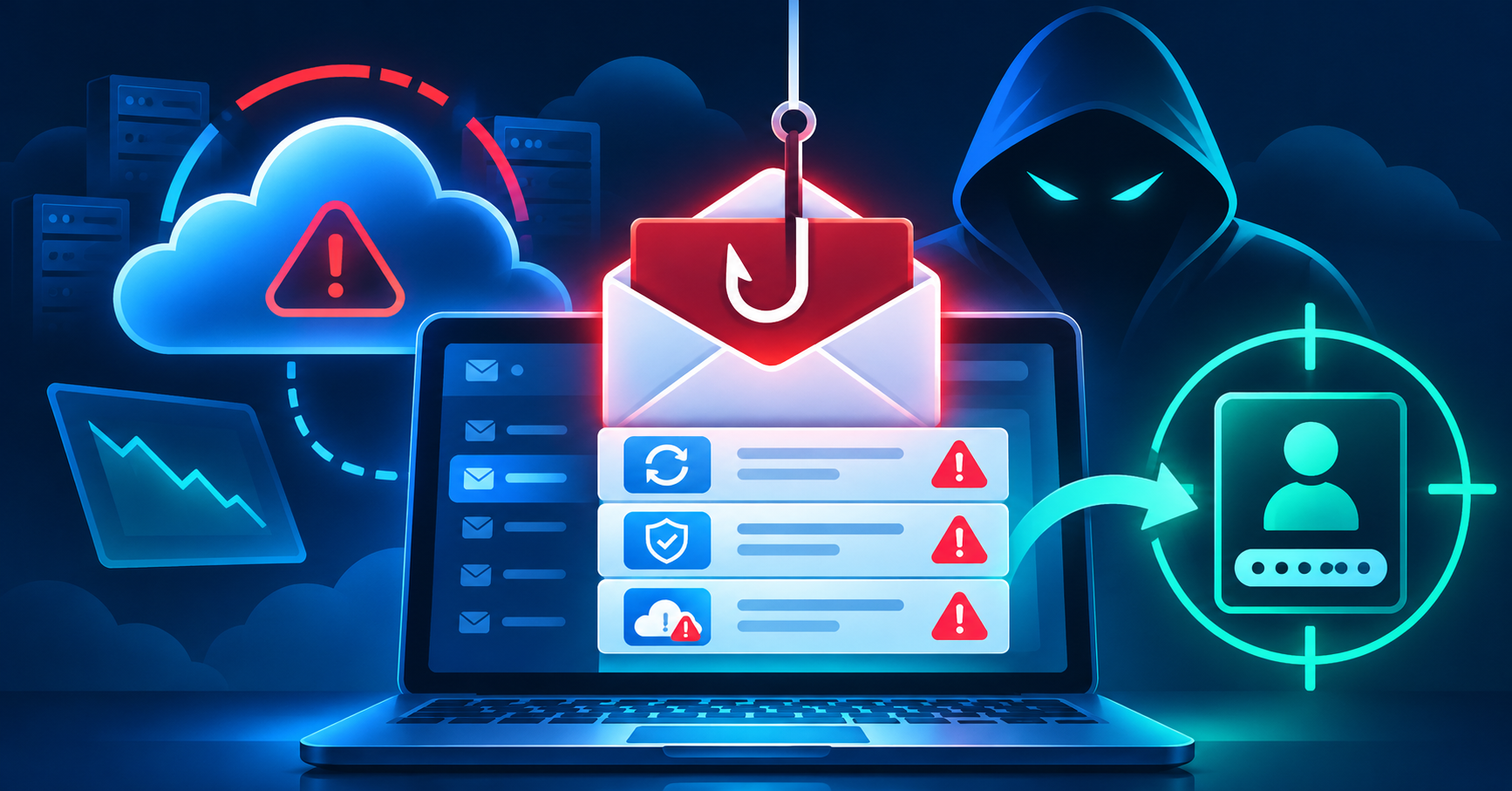
When an Outage Becomes an Opportunity: Cybercriminals Exploit Microsoft 365 Disruptions
Share this post
Author
The services may be restored, but the security risks are far from over.
Following the widespread Microsoft 365 outage on November 12–13, cybercriminals wasted little time turning operational disruption into a cybersecurity opportunity. As organizations worked to restore normal operations and employees sought answers about interrupted services, threat actors were already capitalizing on the confusion.
Microsoft Threat Intelligence identified a large-scale phishing campaign leveraging fraudulent Microsoft 365 service notifications to lure unsuspecting users into interacting with malicious links.
The bottom line: Even when a technology disruption is not caused by a cyberattack, it can quickly become a catalyst for one.
Turning Disruption into Deception
During an outage, employees naturally expect to receive communications about service restoration, account access and technical issues. Cybercriminals understand this behavior and exploit it.
In the latest campaign, attackers distributed convincing emails impersonating Microsoft, warning recipients that messages had been held during the outage and would be permanently deleted unless immediate action was taken. Separate research from Trellix also identified fraudulent account security notifications directing users to counterfeit Microsoft sign-in pages.
These campaigns highlight several tactics employees should be particularly mindful of following a service disruption (not all have been confirmed in this specific campaign):
- Fake password reset requests: Claiming users must update their passwords to restore access to Microsoft 365.
- Fraudulent email recovery notifications: Suggesting that missing or undelivered emails need to be manually recovered.
- Account verification requests: Claiming that users must reauthenticate or confirm their identity following the outage.
- Fake MFA notifications: Attempting to trick users into approving unexpected authentication requests.
- IT help desk impersonation: Posing as internal support teams or Microsoft representatives offering assistance.
By incorporating familiar branding, legitimate incident reference numbers and time-sensitive language, attackers make fraudulent communications appear like a natural part of the recovery process.
The Real Target: Your Organization’s Identity
While the immediate lure may be restoring email or regaining access to an application, the broader objective is often identity compromise.
A single compromised Microsoft 365 account can potentially provide an attacker with access to sensitive emails, internal communications, organizational data and connected applications. It can also create opportunities for lateral movement, business email compromise, data theft and additional phishing attacks originating from a trusted internal account.
For educational institutions, government agencies and other organizations managing sensitive information, the implications can extend well beyond an individual user’s mailbox.
This is why identity security remains such a critical component of an organization’s overall cybersecurity strategy.
What Organizations Should Do Now
IT and security teams should use this recent event as an opportunity to reinforce security awareness and review existing safeguards.
Remind employees to:
- Verify outage-related communications through established internal IT channels.
- Avoid clicking unsolicited password reset, account verification or email recovery links.
- Access Microsoft 365 applications directly through known, trusted websites.
- Never approve unexpected MFA requests.
- Report suspicious communications promptly, even if they have already clicked a link.
IT and security teams should consider:
- Reviewing email telemetry for outage-themed phishing messages.
- Investigating unusual sign-ins, authentication activity and changes to MFA registrations.
- Reviewing suspicious mailbox forwarding rules and application permissions.
- Validating Microsoft Defender for Office 365 Safe Links and other anti-phishing configurations.
- Prioritizing phishing-resistant authentication methods, such as passkeys and security keys.
- Resetting credentials and revoking active sessions when account compromise is suspected.
Administrators should verify legitimate service disruptions directly through the Microsoft 365 admin center rather than relying on links contained in unsolicited notifications.
Cyber Resilience Extends Beyond Service Restoration
Restoring technology is only one part of recovering from a service disruption. Organizations must also remain vigilant against the secondary threats that emerge in its aftermath.
Through Guardian 365, Forsyte’s approach to continuous threat monitoring, identity protection and proactive security management helps organizations address evolving threats across their Microsoft environments.
As cybercriminals continue to adapt their tactics to real-world events, maintaining visibility across identities, endpoints, email and cloud applications remains essential.
The next cybersecurity threat may not be the outage itself, but the email that arrives after it.
If your organization has concerns about suspicious outage-related communications, potentially compromised accounts or its current identity security posture, please reach out to your dedicated Guardian 365 Customer Success Account Manager or contact the Guardian 365 SOC through your established support channels.
Not a Guardian 365 Customer Yet?
You don’t have to sort through every advisory on your own. A free security assessment gives you a clear picture of where your Microsoft 365 environment stands today and what to prioritize first.
Guardian 365 provides 24×7×365 managed security operations built around the Microsoft security ecosystem you already own, so your team gets expert eyes on threats without building a full security operation in-house.
We make security easy.
Ready to make security easy?
Find out where your organization stands. Our free security assessment gives you a clear picture of your current posture and a roadmap for what comes next.